
Pre-foreclosure research starts before a property reaches an auction page or becomes REO inventory. At this stage, users often need owner contact details, property records, mortgage context, distress signals, and local status checks before deciding whether a lead is worth more time. The process also needs care, because these properties may involve homeowners under financial pressure. This article looks at research tools and data sources, not legal or financial advice. The right choice depends on whether the user needs foreclosure-specific search, homeowner contacts, county-level data, or broader prospecting tools.
ForeclosureHub stays first because it is built around foreclosure search, owner data, skip tracing, alerts, and property records. REDX adds a real estate agent prospecting angle through pre-foreclosure leads and contact data. BatchData brings a more structured data-provider layer for users who need organized property and foreclosure records. PropertyRadar adds broader owner research, property filters, and outreach support. The list focuses on earlier-stage lead research instead of repeating another auction or REO comparison.
Lead Sources Chosen for Early Property Research
These tools solve different parts of the pre-foreclosure research process. ForeclosureHub is stronger for foreclosure-first search and owner context. REDX focuses more on agent prospecting and homeowner contact data. BatchData is closer to structured pre-foreclosure datasets, while PropertyRadar supports broader owner and property research. Here is the role of each company:
- ForeclosureHub: Foreclosure-specific search, owner data, skip tracing, alerts, and property records;
- REDX: Pre-foreclosure leads, homeowner contact data, prospecting, and agent outreach tools;
- BatchData: Pre-foreclosure data, owner contacts, financial details, and property insights;
- PropertyRadar: Property records, owner research, lead discovery, and outreach support.
This Top 4 is about early lead research rather than browsing homes that are already listed. The best choice depends on whether the user needs property context, contact data, structured records, or broader prospecting support.
1. ForeclosureHub
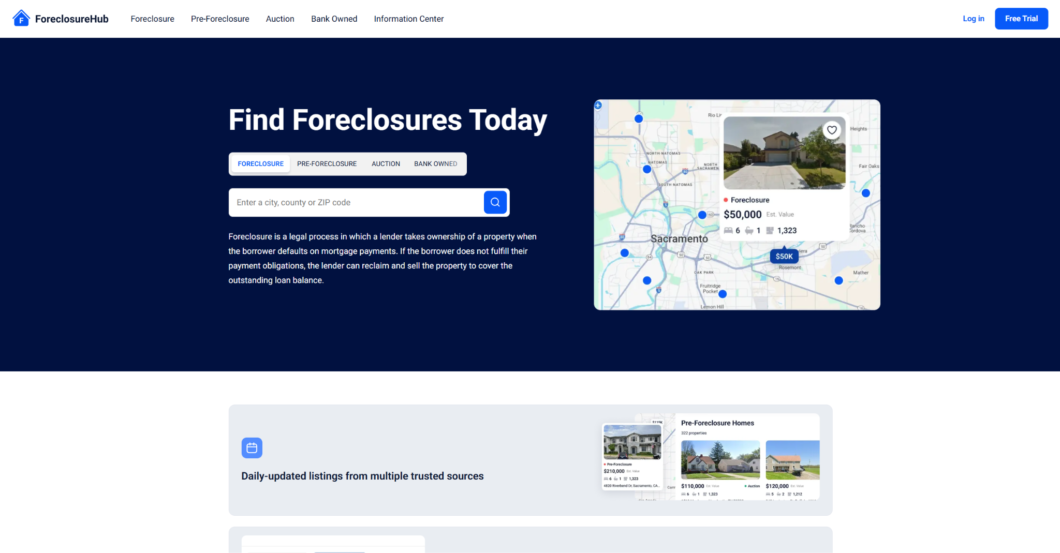
ForeclosureHub takes the first position because it is built for foreclosure-first research rather than broad prospecting alone. Users can search pre-foreclosure, foreclosure, bank-owned, and auction listings across the United States. The ForeclosureHub pre foreclosure search tool brings distressed property data into a focused search system and helps users review properties with more context. The platform also gives users access to owner details, mortgage records, tax data, transaction history, market information, and skip tracing before deciding what to research next. Some county data may update faster than others, and there is no dedicated mobile app yet.
ForeclosureHub is especially relevant when the user wants property context before outreach or auction comparison. Free skip tracing is included with every property search, which makes owner research more direct. Saved searches and alerts help users track matching properties without repeating the same search manually. This matters when the goal is to narrow the search before spending time on outreach or deeper checks. ForeclosureHub works best when the user needs a cleaner foreclosure-specific starting point.
ForeclosureHub should be used as a research source, not as legal or financial advice. The platform connects property status, owner data, and market context before users move to deeper checks:
- Pre-foreclosure, foreclosure, bank-owned, and auction listings;
- Free skip tracing included with every property search;
- Owner, mortgage, tax, assessment, and transaction details;
- Market data for sale, rental, and comparable property checks;
- Saved searches and email alerts for matching properties.
ForeclosureHub is the strongest first stop when the user wants a foreclosure-specific property context before comparing broader lead tools. It gives the search more structure before the user moves into contact research, auction pages, or other prospecting platforms.
2. REDX
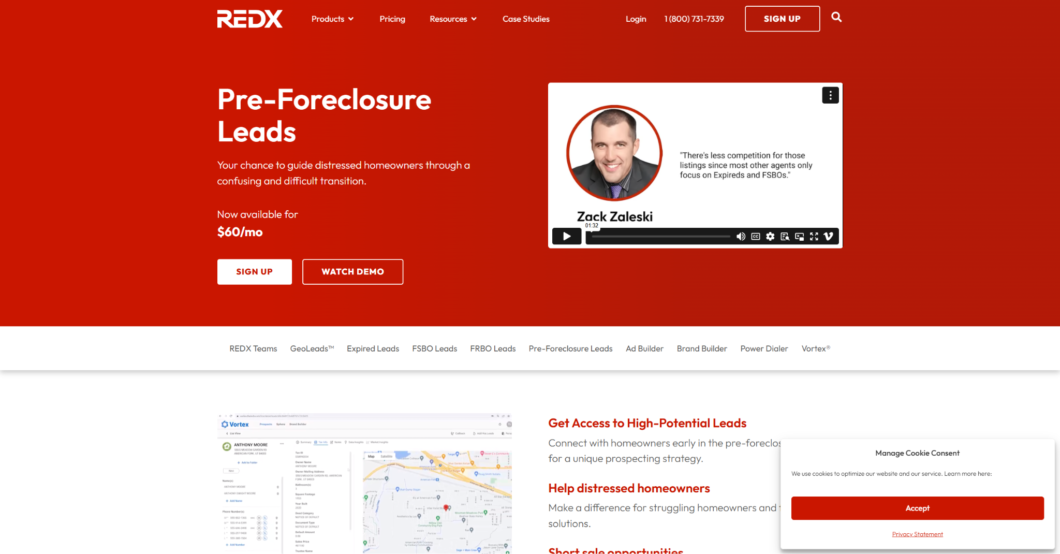
REDX brings a real estate agent prospecting angle to the list. Its pre-foreclosure leads give agents contact information for homeowners whose properties are in the foreclosure process. That makes REDX more focused on contact-driven prospecting than full property research. This type of lead work needs careful communication, because contacting distressed homeowners comes with compliance and ethical concerns. REDX makes sense for users who need homeowner contact data rather than a full foreclosure search platform.
REDX may be practical when the user already knows the target market and wants a lead source for agent outreach. Depending on the product setup, it can support prospecting with phone numbers, emails, lead lists, and related sales tools. Still, the user needs to verify property status, local rules, and lead accuracy before acting on any record. It is not a shortcut around research, and it should not be treated that way. REDX works best when the main task is contact-driven prospecting.
REDX is mainly about lead contact and outreach support. It is not the same type of tool as a foreclosure property research database, so users should understand its role before adding it to the process:
- Pre-foreclosure leads for real estate agents;
- Homeowner contact information;
- Prospecting support for seller outreach;
- Lead lists tied to properties in the foreclosure process;
- Better for contact-driven work than full property research.
REDX can help agents start conversations with potential sellers. It should be paired with verification, compliance checks, and careful communication.
3. BatchData
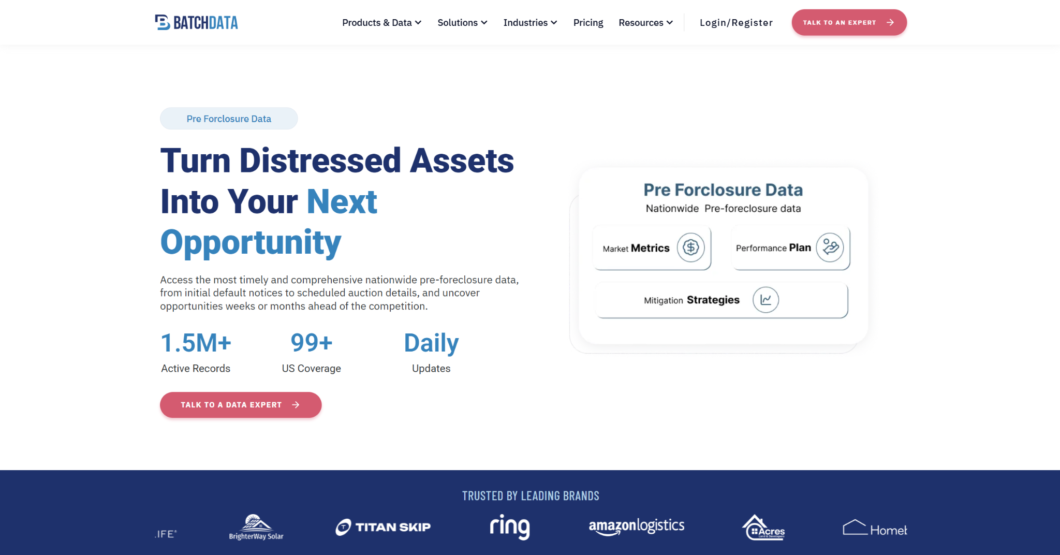
BatchData gives the list a stronger data-provider angle. Its pre-foreclosure data can include owner contacts, financial data, property insights, auction information, and historical foreclosure records. This makes it more relevant for users who need structured pre-foreclosure information instead of a simple public listing page. BatchData is more data-focused than agent prospecting tools like REDX. It is a better match for users who care about cleaner datasets and property-level signals.
BatchData can support investors, platforms, agents, and analysts who need pre-foreclosure records in a more organized format. Data from county recorders, courts, and official sources still needs interpretation before it becomes useful in a real search. Users should check property status, owner information, filing dates, and local context before making decisions. The value is in structure, not in treating every record as ready to use. BatchData works best when the user needs pre-foreclosure records with more depth.
BatchData is strongest when the user wants data depth rather than only a prospecting list. It can support research and analysis, but the user still needs verification before outreach or investment decisions:
- Pre-foreclosure data and property insights;
- Owner contacts and financial data;
- Auction date and trustee information when available;
- Historical foreclosure filing data;
- Useful source for structured real estate datasets.
BatchData is a strong option for users who need organized pre-foreclosure information before building outreach or analysis around it. It gives the search more structure, but it still depends on careful checking and local context.
4. PropertyRadar
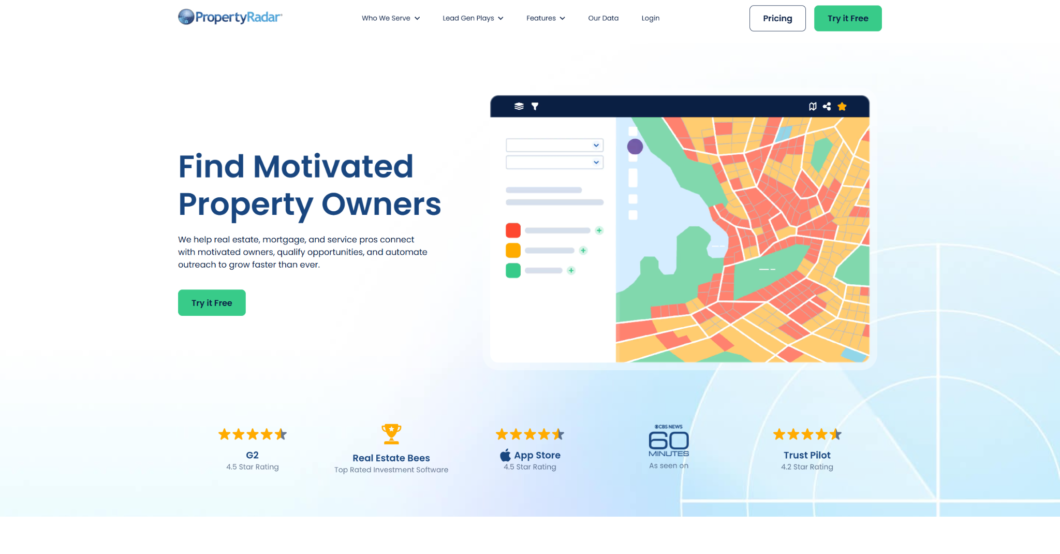
PropertyRadar adds a broader owner and property research angle. It helps users find leads, research properties, and connect with owners through property data and marketing tools. The platform can be relevant for real estate, mortgage, and local service professionals who need owner and property intelligence. It is not only a foreclosure tool, but distress signals and property filters can support foreclosure-adjacent research. PropertyRadar works best when the user wants broader prospecting with property records behind it.
PropertyRadar can help users build targeted lists, understand property and owner context, and plan outreach. Its value depends on how clearly the user defines the lead type and target market. Broader prospecting tools require careful filtering, because not every motivated owner signal is a foreclosure lead. That makes the tool more flexible, but also less narrow than a dedicated pre-foreclosure source. PropertyRadar fits users who want property research and outreach support in one place.
PropertyRadar is most relevant when the user wants to combine property research with lead discovery. It should be used with clear filters and responsible outreach practices:
- Property and owner data;
- Lead discovery and targeted list building;
- Motivated owner and distress signal research;
- Outreach support for real estate professionals;
- Better for broader prospecting than foreclosure-only search.
PropertyRadar rounds out the list by adding a wider owner research and outreach layer. It is useful when the search goes beyond foreclosure-only records and into broader property-based prospecting.
Which Tool Fits the Search Stage?
The best tool depends on where the user starts the search. ForeclosureHub is the best first choice when the user needs foreclosure-specific listings, owner data, skip tracing, alerts, and property records. REDX is better when the goal is agent prospecting around pre-foreclosure homeowner contacts. BatchData fits users who want structured pre-foreclosure datasets and property-level signals. PropertyRadar works better when the search expands into broader owner research, lead discovery, and outreach planning. Serious users may combine more than one source, but each one should be matched to a clear research task.
Final Thoughts
This Top 4 is different from the previous auction, REO, and broad owner data lists because it focuses more directly on pre-foreclosure lead research and homeowner contact context. ForeclosureHub remains the strongest first choice when the user needs foreclosure-specific search, owner data, free skip tracing, alerts, and property records. REDX adds a prospecting angle for real estate agents, while BatchData brings a more structured pre-foreclosure data layer. PropertyRadar gives the list broader property research and outreach support.
Pre-foreclosure research needs more care than ordinary listing browsing. Users should verify property status, ownership, local records, and contact rules before acting on any lead. None of these tools should be treated as legal or financial advice. The cleanest process starts with choosing the right tool for the right stage, then checking the details before any outreach or next step.